marketing
Organic vs Paid Social Media in 2026: Where Should Brands Invest for Maximum Growth?
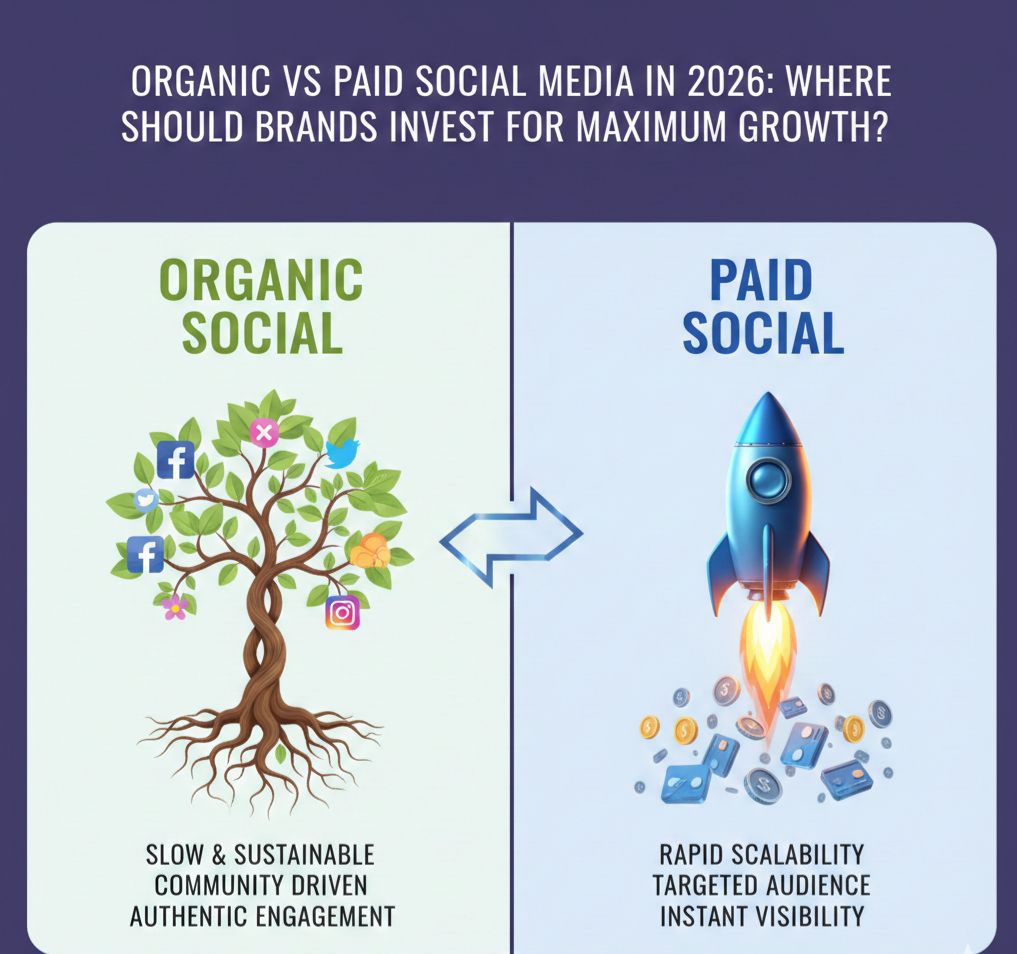
Social media marketing in 2026 looks very different from what it did even three years ago. Algorithms have evolved, audience behavior has shifted, and the cost of attention has risen sharply. Brands today are asking a critical question: should they invest more in organic social media or paid advertising? The real answer lies in understanding what each strategy delivers and how they complement each other.
Organic social media remains the foundation of brand identity. It is where audiences understand who a brand is, what it stands for, and why it matters. Platforms like Instagram, YouTube Shorts, and LinkedIn continue to reward consistent, high-quality content that sparks conversations and community engagement. Organic content builds trust over time. It also gives brands long-term visibility because strong posts often continue to generate impressions days or weeks after publishing.
In 2026, one of the biggest trends shaping organic reach is authenticity. Audiences are far more responsive to real stories, behind-the-scenes content, and relatable messaging than highly polished advertisements. Brands that behave like creators rather than advertisers are seeing higher engagement rates and stronger follower loyalty.
However, organic reach alone is rarely enough anymore. Platform algorithms increasingly limit the percentage of followers who see unpaid posts. Even well-established brands often reach only a fraction of their audience organically. This is where paid social media plays a critical role.
Paid advertising offers precision. Brands can target audiences based on interests, demographics, purchase behavior, and even engagement history. Paid campaigns are also measurable in real time, allowing marketers to adjust creative and targeting quickly. For product launches, event promotions, or performance-driven campaigns, paid media remains unmatched in delivering fast, scalable results.
Another reason paid media has grown in importance is competition. In crowded categories such as fashion, tech, and entertainment, relying solely on organic content makes it difficult to break through the noise. Paid promotions ensure visibility, especially during key marketing windows.
Despite this, overreliance on paid media carries risks. Rising ad costs across Meta, Google, and TikTok have significantly increased customer acquisition expenses. Brands that depend entirely on paid traffic often struggle when budgets tighten. Without a strong organic presence, paid campaigns may generate short-term sales but fail to build lasting brand equity.
The smartest brands in 2026 are not choosing between organic and paid social media. They are integrating both into a unified strategy. Organic content builds credibility, storytelling, and community. Paid campaigns amplify the best-performing organic content, ensuring it reaches the right audience at scale.
For example, many successful companies now follow a content-first model. They test ideas organically, identify posts that perform well, and then promote those posts through paid advertising. This approach reduces risk and improves return on investment because the content has already proven its appeal.
Another growing trend is creator-led marketing. Brands are collaborating with influencers and content creators whose organic posts already feel authentic to audiences. Paid partnerships with creators often perform better than traditional advertisements because they blend seamlessly into the social feed.
So where should brands invest in 2026? The answer is balance. Organic social media should remain the core of any brand’s digital strategy, responsible for storytelling, engagement, and long-term audience building. Paid social media should be used strategically to scale reach, drive conversions, and support major campaigns.
In a landscape where attention is the most valuable currency, brands that combine authenticity with smart media spending will have the strongest advantage. Organic builds the relationship. Paid accelerates the results. Together, they define the future of social media marketing.


