Entertainment
Coachella 2026 Exposed the Reality of Hype Culture, Price Inflation, and the Business of Virality
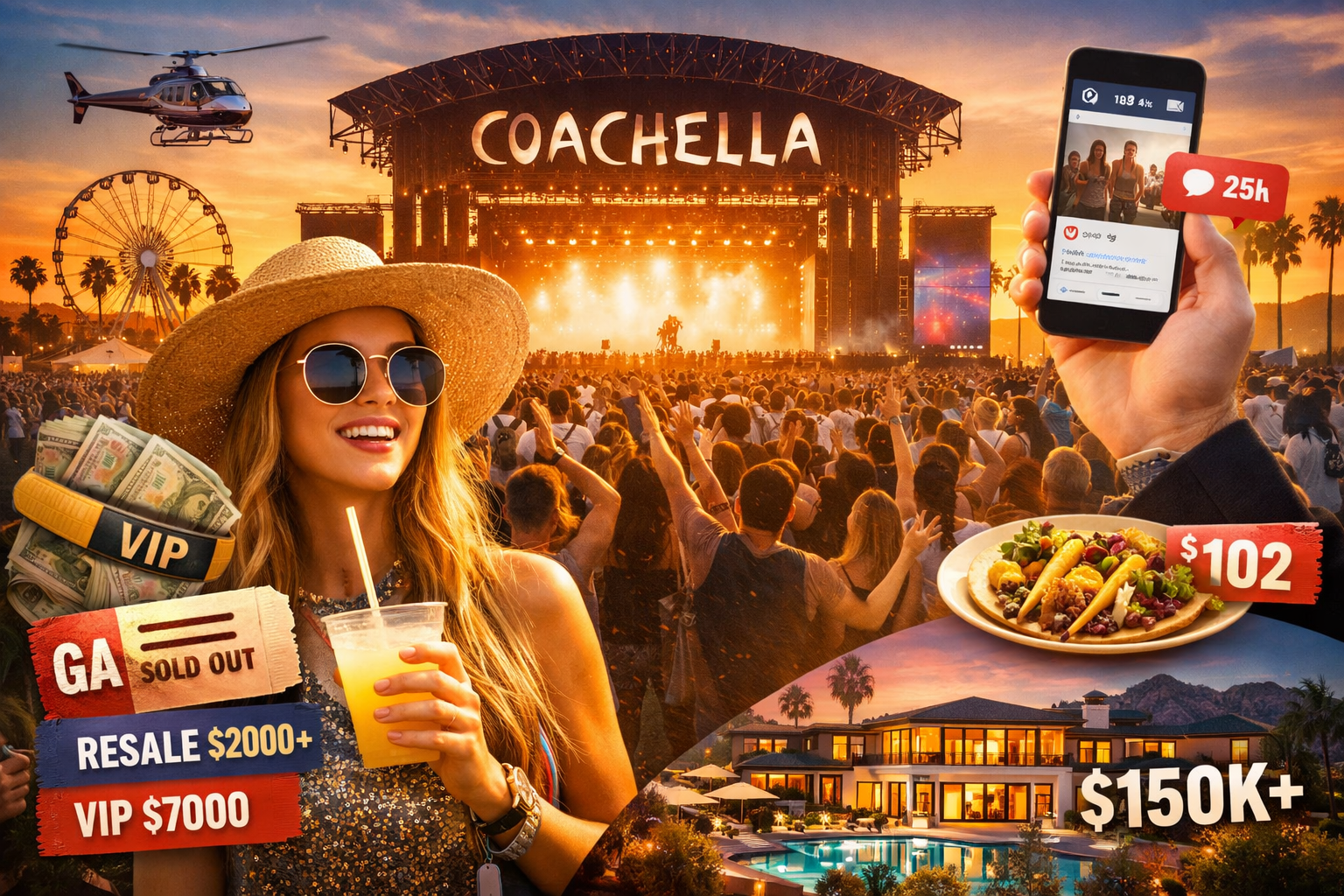
Coachella 2026 kicked off at the Empire Polo Club in Indio, California, marking its 25th edition, but the real story wasn’t just the music, it was the money. What unfolded over the weekend wasn’t just a festival, it was a live demonstration of how demand, hype, and digital culture can redefine pricing at every level.
At the center of it all was the Coachella Valley Music and Arts Festival, where ticket pricing alone set the tone. General admission passes started at $549, while VIP entry began at $1,199. Both tiers sold out within a week, creating the perfect conditions for the resale market to take over. What followed was predictable but still shocking. Weekend passes climbed past $2,000, single-day entries hovered around $700, and some listings stretched into the $6,000 to $7,000 range.
This wasn’t just about popularity. It was about perceived value. The faster tickets sold out, the higher the resale demand climbed. Scarcity wasn’t just real, it was amplified. And once the conversation shifted online, pricing stopped being tied to the event itself and started reflecting the cultural currency attached to being there.
Inside the festival, the spending didn’t slow down. It accelerated. VIP lockers ranged between $89 and $99, while curated dining experiences like the Rose Garden meal touched $362.50. On average, attendees were spending around $375 on food, drinks, and merchandise. Individual items became talking points of their own. A $17 lemonade, tacos priced at $102, these weren’t just complaints, they were signals. Signals of how far pricing can stretch when the environment is driven by exclusivity and attention.
But the real escalation happened outside the festival grounds. Accommodation became its own parallel market. Group rentals in nearby areas ranged from $3,000 to $8,000, while luxury homes reached up to $150,000 for the weekend. Premium festival packages crossed $10,000 per person, and ultra-luxury suites climbed to $40,000 per day or $70,000 for a full weekend stay. At that level, Coachella stopped being a music festival and started resembling a high-end lifestyle experience.
What ties all of this together is not just demand, but amplification. Social media played a defining role in shaping how these prices were perceived and justified. The more the festival trended, the more it positioned itself as something worth paying for, regardless of cost. Visibility became value. Being present wasn’t enough, being visible within the experience became the goal.
This created a layered ecosystem where pricing was no longer linear. It was dynamic, reactive, and deeply influenced by digital narratives. Influencers, brand activations, curated experiences, all contributed to a perception that Coachella wasn’t just an event, it was a moment that needed to be captured, shared, and monetized in real time.
At the same time, this environment exposed the mechanics of modern event marketing. Hype was not accidental. It was engineered. Limited availability, rapid sellouts, exclusive add-ons, and premium tiers all worked together to create urgency. And once urgency was established, pricing followed.
What Coachella 2026 ultimately revealed is a shift in how cultural experiences are consumed. Access is no longer just about interest or fandom. It is about timing, digital awareness, and financial flexibility. The experience itself becomes secondary to the narrative built around it.
And that narrative is powerful. It can justify a $7,000 ticket, normalize a $100 meal, and turn a weekend festival into a multi-layered economic engine. The question is not whether people will continue to pay. They will. The question is how far this model can stretch before the definition of “accessible culture” begins to change entirely.
Coachella has always been a reflection of where music, fashion, and culture intersect. This year, it also reflected where pricing, perception, and digital influence collide. And that intersection is only getting more complex.


